
Abyei Region | March 2025
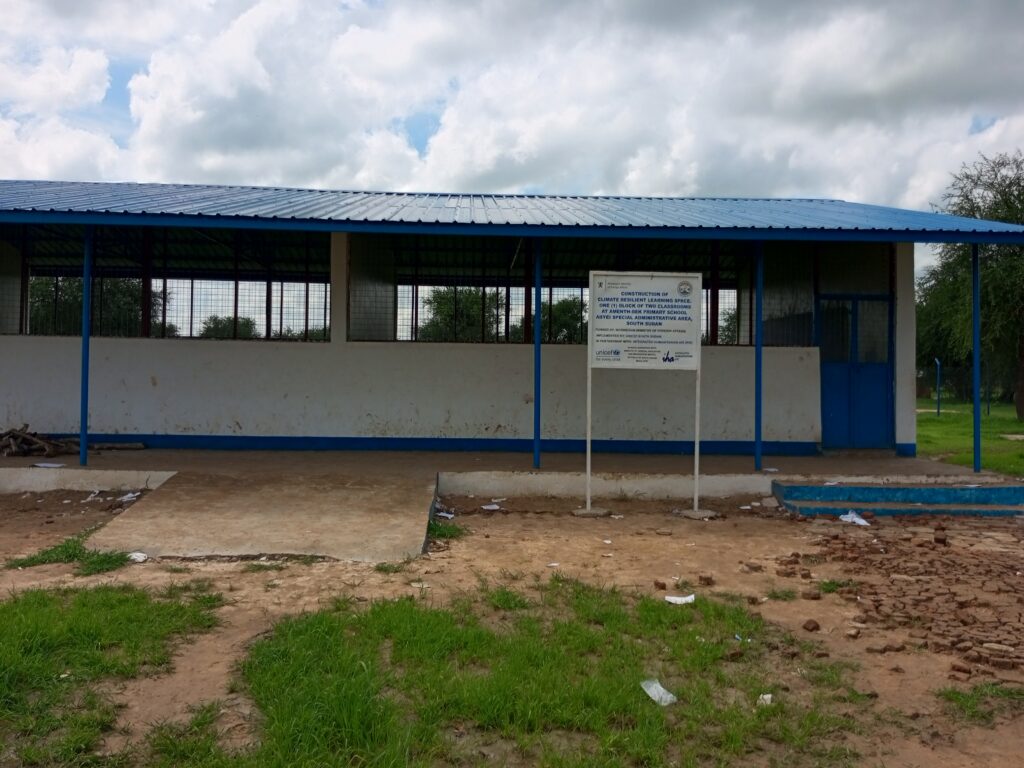
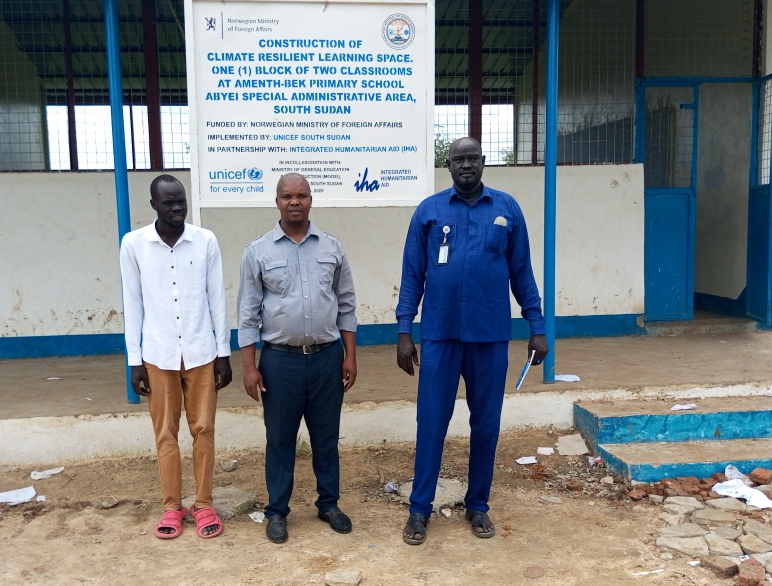
Integrated Humanitarian Aid (IHA), with financial support from UNICEF, has successfully completed the construction of a climate-resilient two-classroom block at Amenth Bek Primary School in the Abyei Region, providing hundreds of children with a safer and more conducive environment for learning.
Implemented between January and March 2025, the project was designed to address the growing demand for quality educational infrastructure in one of South Sudan’s most vulnerable and conflict-affected regions. The new classroom block responds to longstanding challenges of overcrowded classrooms, inadequate learning spaces, and limited educational facilities that have affected children’s access to quality education.
Investing in Safe and Inclusive Learning
For many years, schools across Abyei have operated under difficult conditions, with temporary structures and overcrowded classrooms limiting the quality of teaching and learning. Conflict, displacement, and recurring humanitarian crises have further strained the education system, leaving many children without access to safe and adequate learning spaces.
The newly constructed classroom block provides a durable, climate-resilient facility designed to withstand the region’s environmental conditions while creating a secure and child-friendly environment where learners can thrive. The classrooms are equipped with improved ventilation, natural lighting, and durable construction materials that enhance both learner comfort and the longevity of the facility.
The investment contributes to UNICEF’s and IHA’s shared commitment to ensuring that every child has access to safe, inclusive, and quality education regardless of the challenges posed by conflict or displacement.
A Collaborative Approach to Community Development
The success of the project was made possible through close collaboration between Integrated Humanitarian Aid, UNICEF, local authorities, school management, community leaders, and residents of Amenth Bek.
From the planning stage through construction and handover, community members actively participated in the project by supporting site preparation, providing local labour where appropriate, and contributing to discussions on school ownership and future maintenance. This participatory approach has strengthened community ownership and reinforced the importance of protecting and maintaining educational infrastructure for future generations.
In addition, the project prioritized the use of locally available construction materials and labour whenever possible, creating temporary employment opportunities while contributing to the local economy.
Overcoming Challenges
Despite facing several implementation challenges, including delayed funding, disruptions in the transportation of construction materials due to insecurity along the Wau–Warrap–Abyei corridor, and shortages of skilled labour, the project team successfully completed the construction while maintaining high quality standards.
Regular technical supervision and quality assurance ensured that the facility met engineering, safety, and environmental requirements, resulting in a resilient structure capable of serving learners for many years.
Improving Educational Opportunities
The completion of the new classroom block is expected to significantly improve the learning experience for approximately 200 pupils at Amenth Bek Primary School.
The additional classrooms will help reduce overcrowding, create a more conducive teaching and learning environment, and improve learner concentration and participation. Better infrastructure is also expected to contribute to increased school enrolment, improved attendance, enhanced learner retention, and stronger educational outcomes.
By creating more welcoming and secure learning spaces, the project supports children’s right to education and provides opportunities for girls and boys, including those from vulnerable and displaced households, to continue their education in dignity and safety.
Ensuring Long-Term Sustainability
To safeguard the investment, Integrated Humanitarian Aid worked closely with the school administration and local community to develop a maintenance plan for the new facility.
Teachers, school management committee members, and caretakers received guidance on routine maintenance and the importance of preserving school infrastructure. Community engagement throughout the project has laid a strong foundation for continued local ownership, ensuring that the classrooms remain functional and accessible for years to come.
Building Brighter Futures Through Partnership
The successful completion of the climate-resilient classroom block at Amenth Bek Primary School demonstrates the transformative impact of investing in education, even in complex humanitarian settings. Access to safe and quality learning environments is essential not only for improving educational outcomes but also for fostering resilience, hope, and long-term development within communities affected by conflict.
Integrated Humanitarian Aid extends its sincere appreciation to UNICEF for its generous financial and technical support, which made this important initiative possible. UNICEF’s continued partnership is helping to expand access to quality education, strengthen climate-resilient school infrastructure, and improve learning opportunities for children across the Abyei Region.
IHA also expresses its gratitude to the local authorities, school leadership, community members, and construction teams whose dedication and collaboration contributed to the successful delivery of this project. Together, these collective efforts are creating safer learning environments and empowering children with the opportunity to learn, grow, and build a brighter future.
The successful completion of the climate-resilient two-classroom block at Amenth Bek Primary School is a testament to the transformative impact of investing in education in humanitarian settings. By providing a safe, durable, and child-friendly learning environment, the project is helping to improve access to quality education for approximately 200 children while strengthening community resilience and creating opportunities for future generations.
Integrated Humanitarian Aid (IHA) extends its heartfelt gratitude to UNICEF for its generous financial and technical support, which made this project possible. UNICEF’s partnership continues to play a vital role in expanding access to quality education, strengthening climate-resilient infrastructure, and improving the lives of vulnerable children and communities in the Abyei Region.
While this achievement marks an important milestone, significant needs remain. Many schools across Abyei and other underserved areas continue to face shortages of classrooms, learning materials, water and sanitation facilities, and other essential educational infrastructure. Continued investment is therefore critical to ensuring that every child has access to a safe and inclusive learning environment.
IHA welcomes the support of development partners, philanthropic organizations, corporate partners, foundations, and individual donors who share a commitment to improving the lives of vulnerable children and communities. By partnering with IHA, donors can help expand access to quality education, strengthen child protection, improve livelihoods, and build resilient communities across South Sudan.
Together, we can ensure that more children have the opportunity to learn in safe classrooms, realize their full potential, and contribute to a more peaceful, prosperous, and resilient future. END