
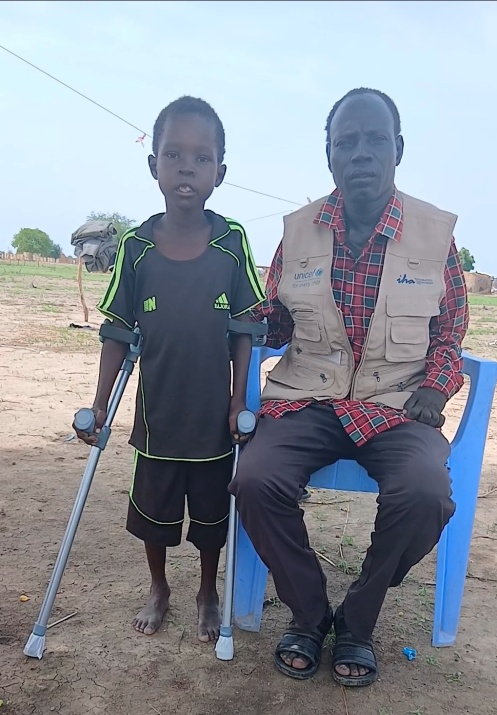
Over the past year, Integrated Humanitarian Aid (IHA), with funding from UNICEF, has strengthened inclusive child protection services by providing comprehensive case management to children with disabilities in Abyei and Ruweng. Through this intervention, IHA has worked alongside government counterparts, communities, caregivers, and local service providers to ensure that children with disabilities receive the protection, care, and support they need to thrive.
Children with disabilities are among the most vulnerable in humanitarian settings. They often face heightened risks of violence, neglect, exploitation, exclusion from education and community life, and limited access to essential services. Addressing these challenges requires individualized, coordinated, and sustained support—an approach that has been at the heart of IHA’s case management programme.
Reaching More Children Than Planned
During the implementation period, IHA provided comprehensive case management services to 60 children with disabilities, doubling the project’s original target of 30 children.
The children reached included:
- 37 boys
- 23 girls
The children were identified through community outreach, referrals from schools and health facilities, local authorities, community-based child protection structures, and household visits conducted by trained social workers and case workers.
Delivering Individualized Protection Services
Every child enrolled in the programme received support based on an individual assessment of their protection concerns, strengths, and specific needs. Trained case workers developed tailored case plans in close consultation with caregivers to ensure that each intervention responded to the child’s unique circumstances.
Depending on identified needs, children and their families benefited from:
- Individual case assessment and case planning.
- Regular follow-up visits and ongoing case monitoring.
- Referrals to health, rehabilitation, education, psychosocial, and other specialized services.
- Family counselling and caregiver support to strengthen protective care at home.
- Coordination with relevant service providers to improve access to essential services.
- Material assistance for children with urgent protection needs, where appropriate.
This coordinated approach helped reduce protection risks while improving children’s access to services that promote their safety, wellbeing, and development.
Empowering Families and Promoting Inclusion
Children thrive when families and communities are equipped to support them. Throughout the year, IHA engaged parents, caregivers, community volunteers, and local leaders to promote positive attitudes towards children with disabilities and strengthen community-based protection mechanisms.
Awareness sessions encouraged greater understanding of disability inclusion, challenged stigma and discrimination, and reinforced the rights of every child to live free from violence, neglect, and exclusion. Caregivers also received guidance on positive parenting practices and information on available support services within their communities.